


加蓬
加蓬的森林资源和背景
UPDATING IN PROGRESS
(Coup d'état of September 2023)
根据 FRMi 2018 年进行的一项 AfDB 研究,加蓬的森林面积约为 2,230 万公顷,粮农组织 (FAO) 的研究显示,该国的森林面积为 2,350 万公顷(2020 年),占该国总面积的 87%。几乎全部林区均由原生林或自然再生林组成。

陆地面积
25.8百万公顷
森林覆盖
23.5百万公顷
生产林
14百万公顷
森林所有权
100% 公有
森林所有权
加蓬的森林 100% 归国家所有,但林区的管理可分为三个不同的类别:
- 由私人特许经营商管理的生产林,但管理权完全由国家管理。
- 由国家直接管理的防护林。加蓬有 13 个国家公园和一些其他保护区,总面积约占该国领土面积的 12%。
- 农村林区,一般是土地和森林,农村社区和森林居民只要遵循林业局规定的条件,就可以自由行使其习惯权利。
森林资源
森林类型
主要有三种森林类型:
- 西部的常绿雨林,已大量采伐和严重退化,某些地区已退化为主要由加蓬木材行业最重要的树种之一 — 加蓬榄 (Aucomeaklaineana) 和中非烛蜡木 (Dacryodesbuettneri) 组成的次生林;
- 封闭潮湿的加蓬中部森林,覆盖了该国大部分地区,发现了许多与该地区其他类似森林相同的树种,例如金丝红檀 (Lophiraalata)、桃花心木树种(Entandrophragma spp. 和 Khaya spp.)、帕波橄榄 (Canariumschweinfurthii) 和非洲白木 (Triplochitonscleroxylon);
- 东北部的半落叶型森林,主要由西非榄仁树 (Terminalia superba)、橡树 (Millettialaurentii) 和非洲白木 (Triplochitonscleroxylon) 组成。There are three major forest types:
加蓬总体人口密度低,森林面积大,森林损失率相对较低,为每年 0.12%,平均退化率为 0.09%。森林砍伐的主要原因是沿公路和城市发展建立的小规模农业,而森林退化的主要原因是工业采矿和开荒地区的非法伐木。
加蓬是一个森林之国,在十三个国家公园和其他保护区(总面积占该国领土面积的 12% 以上)内,动植物仍然得到了很好的保存和保护。罗佩国家森林公园 (Lopé National Park) 是联合国教科文组织世界遗产。
加蓬分为 9 个省,每个省由一名省长领导,有些省又划分为由县长领导的多个县,有些省则划分为由副县长领导的多个区。
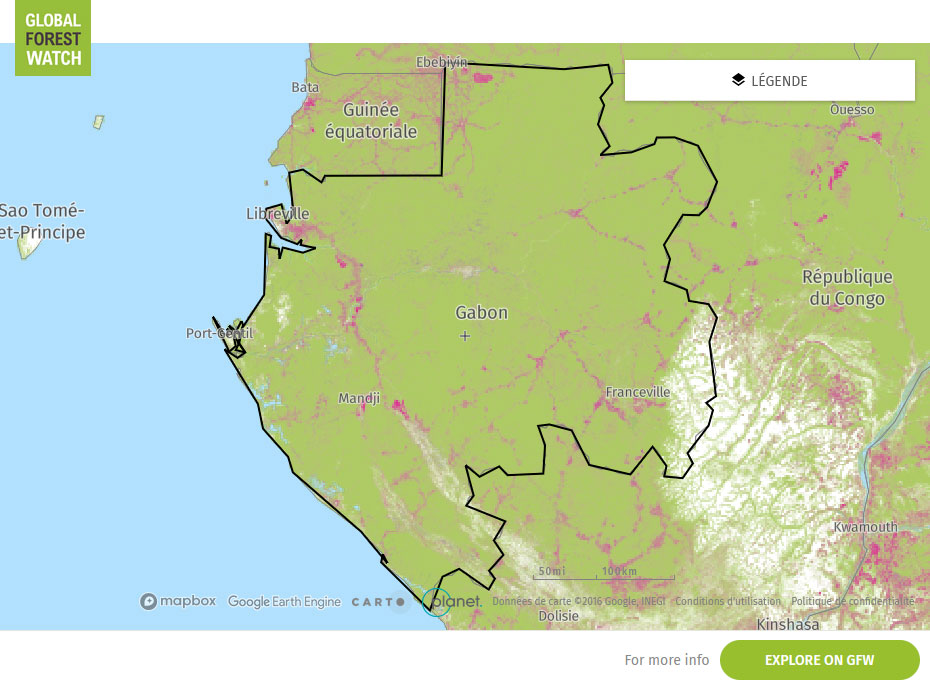
全球森林观察地图
|
CORRUPTION PERCEPTION INDEX (Transparency international)
0 is highly corrupt, 100 is very clean. |
ILLEGAL DEFORESTATION AND ASSOCIATED TRADE (IDAT) Risk (Forest Trend) 84.06/100
00 is higher risk, 0 is lower risk
|
|
SOURCING HUB RISK SCORE (Preferred by nature) 3/100 0 is higher risk, 100 is lower risk
|
COUNTRY DEFORESTESTATION CLASSIFICATION LIST - EUDR (European Commission) LOW risk category For more information about the methodology, see here
|
Interpretation of Risk Indicators
Subnational variations in risks
| HARVESTING SOURCE | DUE DILIGENCE COMPLEXITY | DUE DILIGENCE CONSIDERATION |
|---|---|---|